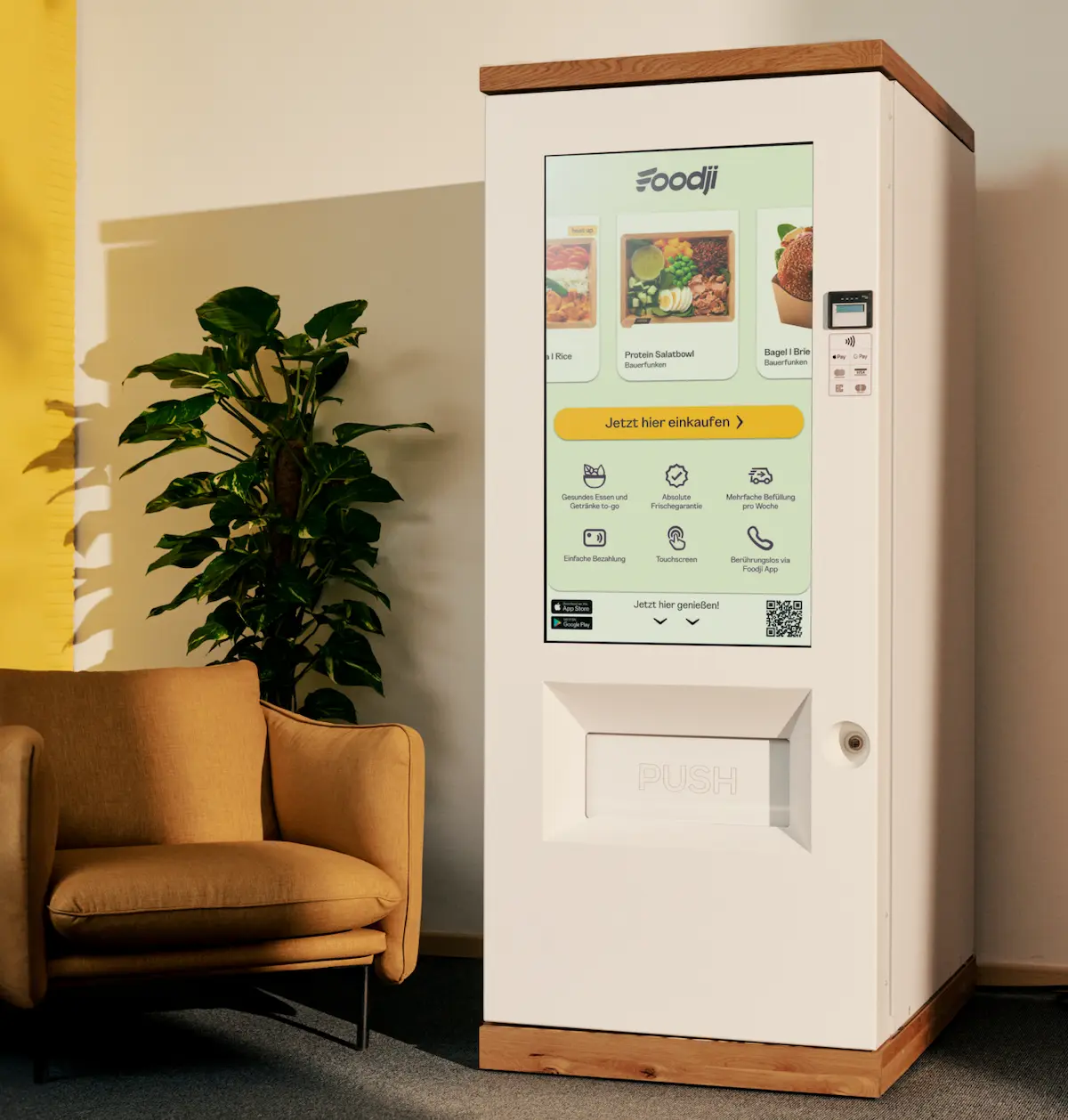
What is Foodji?
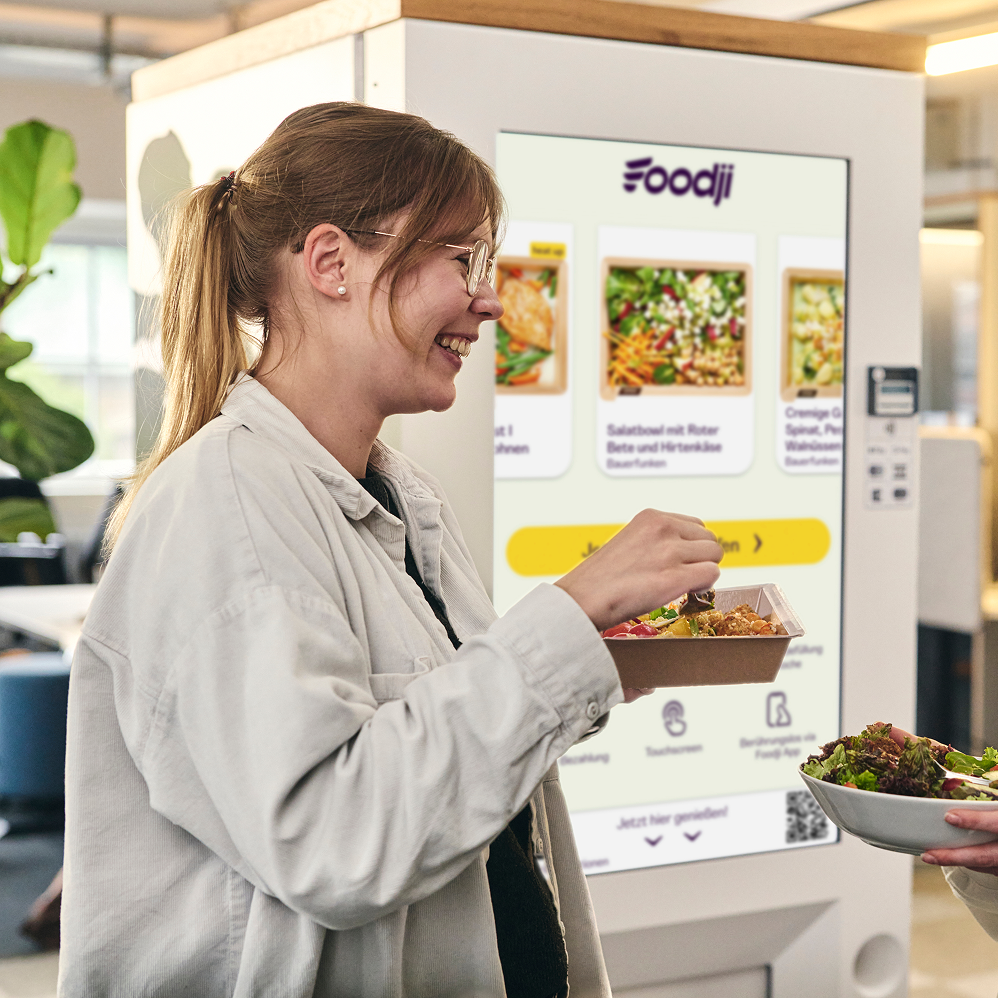
Foodji is a smart vending machine that offers employees subsidised fresh meals around the clock at their workplace.
The Foodji app allows users to browse meals, check out the menu of the next weeks and reserve a meal up to six hours in advance before picking it up at their Foodji.
User Problem & Business Opportunity
Users had no direct way to give feedback on the products they bought from Foodji in the app. Instead, complaints were sent individually to the support team, making it difficult for users to feel heard or influence the product assortment.
At the same time, Foodji lacked structured insights into which products were liked or disliked, limiting opportunities to improve offerings.
Our goal was to introduce a simple feedback feature that lets users share their opinions after purchase, giving them a sense of influence while enabling Foodji to make data-driven product improvements.
Aligning with Business Needs
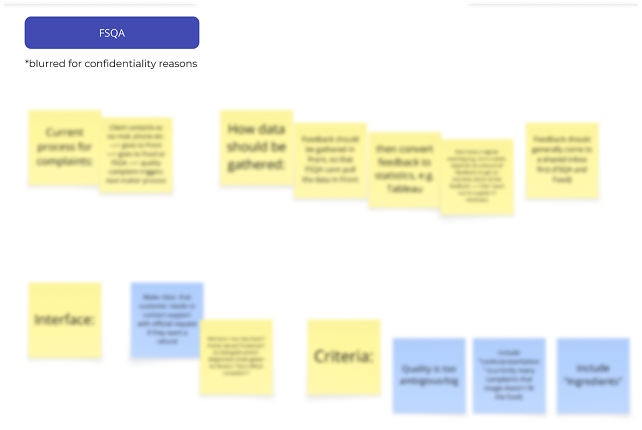
I spoke with internal stakeholders from the Marketing, Planning, Food, and FSQA teams to identify current challenges and gaps in available data.
Most important insights:
- Need for structured feedback collection in the app to replace ad-hoc complaints
- Need for early detection of quality issues through refined rating criteria (taste, packaging, presentation, ingredients)
- Ratings should guide Planning and Food teams to adjust product offerings and quantities
Concept Exploration
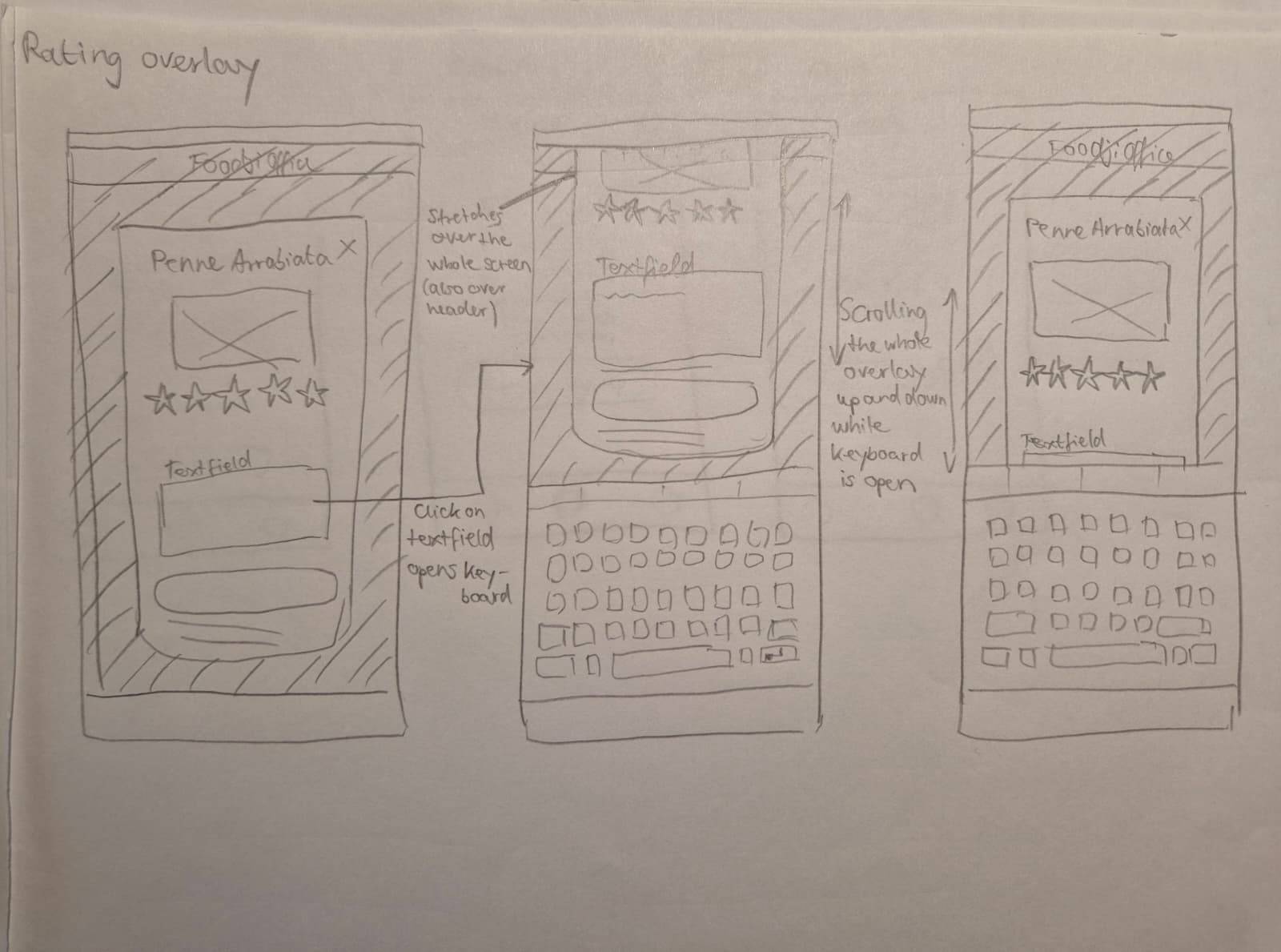
Based on the stakeholder input and market research of other food and e-commerce apps and websites I explored multiple approaches to the Rating feature.
By visualising first ideas with paper sketches, wireframes and simple prototypes I could collect feedback from colleagues in the product and dev team and other stakeholders.
User Research & Prototype Testing
Due to time and budget constraints, I conducted internal user research with active Foodji app users from other departments. The semi-structured user interviews focused on:
- Current behaviour and pain points
- Expectations of a rating feature
I also tested a simple low-fidelity prototype using the think-aloud method to gather early feedback on usability and the overall concept. This helped me identify what users value in a feedback experience and informed my initial design direction.
General insights
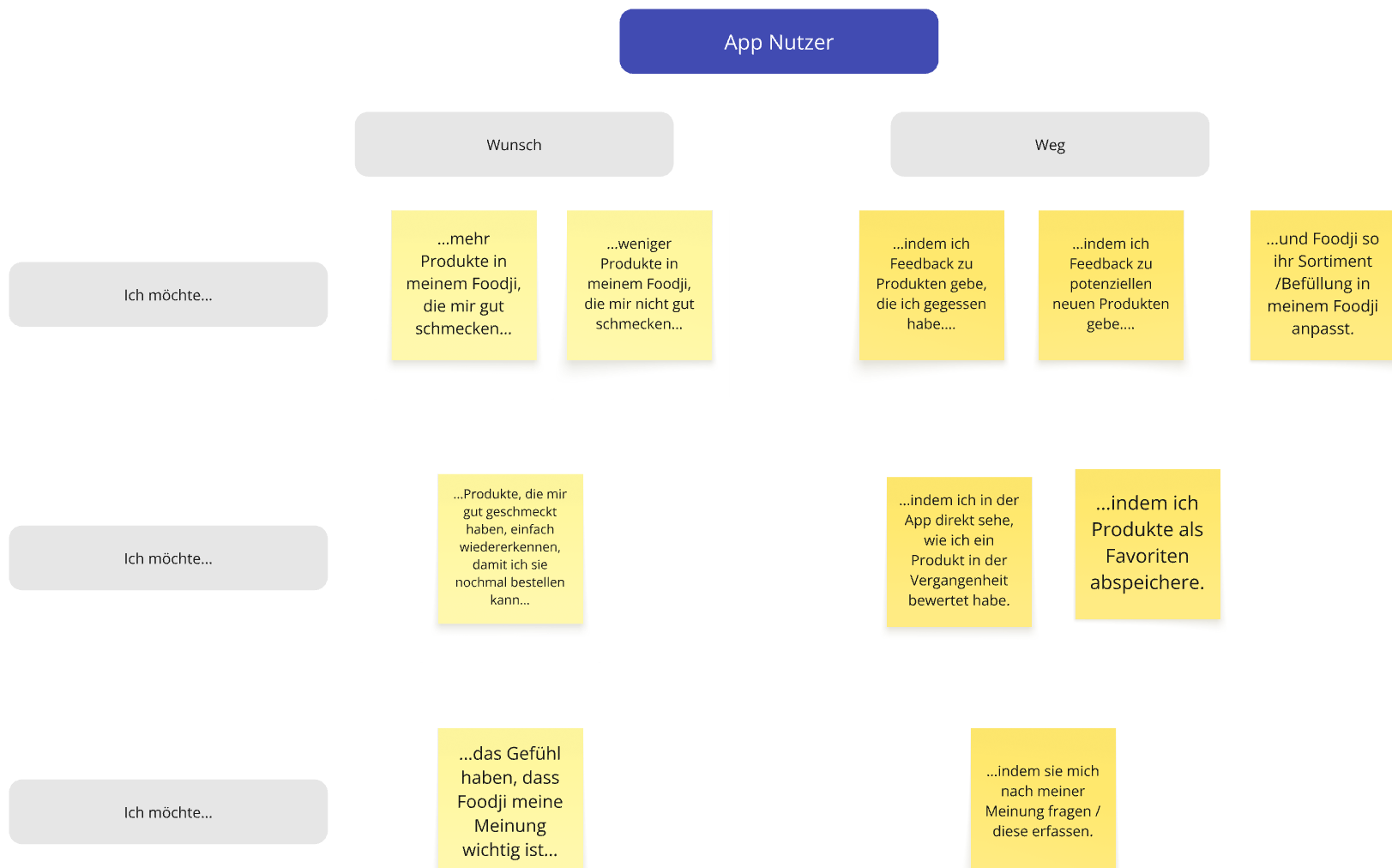
- Intrinsic motivation drives users to give feedback as they wish to influence products and improve the assortment
- Short and simple feedback is preferred
- Users want the ability to rate items quickly (e.g., 5 stars, thumbs up/down)
- Detailed feedback is usually provided by users only for negative experiences
- Feedback should ideally be collected shortly after purchase
Prototype improvements
- Show feedback window only for low ratings (1–3 stars) and ask for additional comments
- If certain keywords appear in the free-text field (e.g., mold, expired), display a note directing users to contact support for a refund
- Make wording of criteria clearer (e.g., “Quality” too broad; use freshness, consistency, taste, etc.)
Final Concept and Visual Design
After incorporating the insights from the user test, I translated the refined concept into the visual design, following our brand design language.
Final concept:
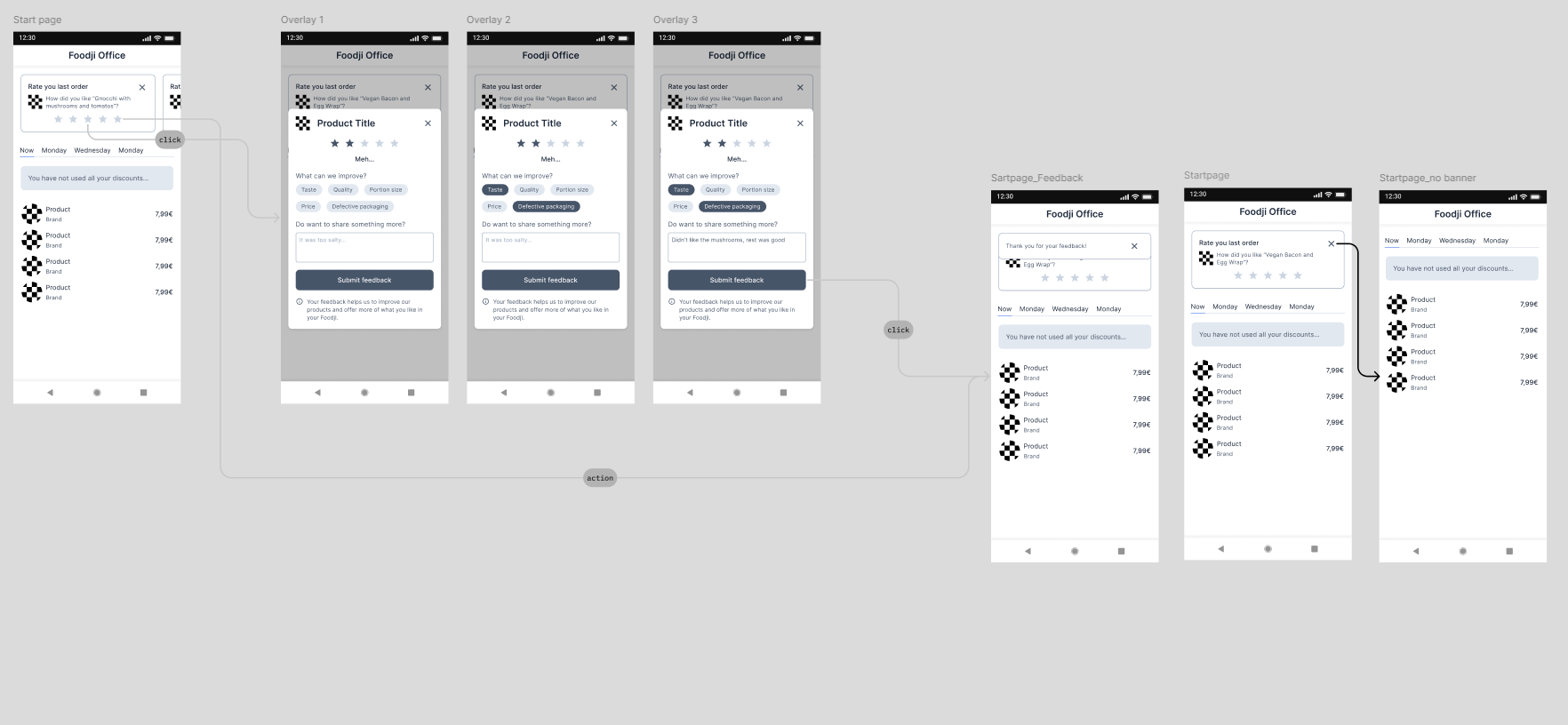
- Users are prompted to rate a meal on the app’s home screen after purchase and pickup, making the option immediately visible
- Ratings focus on fresh products, as users are most motivated to give feedback on these and Foodji can act on it most effectively
- The rating prompt is time-limited to a few days to ensure relevant feedback
- Additional details are requested only after negative ratings, with optional comments for positive ones
*Some parts of the interface design are blurred because of confidentiality reasons.
Finalising the Design Work
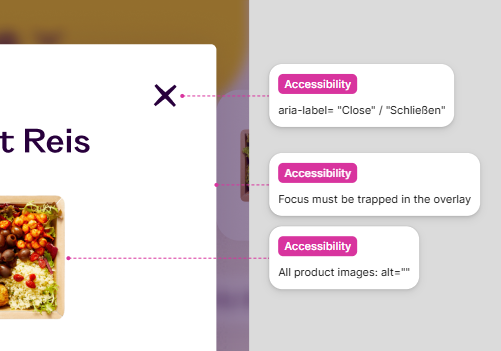
To complete the project, I developed new components for our design system and refined existing ones. The design files were prepared for the developers, including clear user flows, interactive prototypes with animations, accessibility guidelines, and final copy in both German and English.
I also carried out design QA to ensure consistency and quality, which enabled us to launch the feature on time.
Impact & Next Steps
Within six months, the feature generated around 170,000 ratings.
The Food Team actively uses this feedback to collaborate with suppliers, improve products, and phase out poorly rated items. We also received very positive feedback from users who had been waiting for this feature and are now happy to share their opinions.
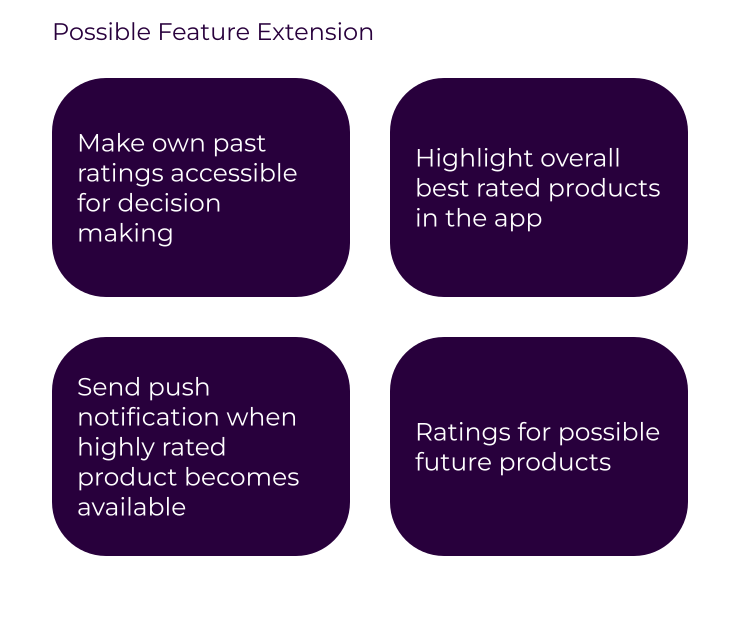
Next steps could include expanding the feature by making past ratings visible to users or using their feedback to recommend products they are likely to enjoy.
* Some of the images are owned by Foodji GmbH